Why talk therapy does NOT Heal trauma
The Neuroscience Truth That Changes Everything
THE FUNDAMENTAL MISUNDERSTANDING
For decades, we've been told that trauma is "all in your head" and that talking about it will heal it. This fundamental misunderstanding has kept millions of people stuck in therapy for years, getting more articulate about their pain but never actually healing from it.
The truth is revolutionary: Trauma isn't stored in your thinking brain - it's stored in your body, your nervous system, and your implicit memory systems.
What You'll Discover:
Why talk therapy alone keeps you stuck in analysis paralysis
The neuroscience of where trauma actually lives in your body
How body-based healing accesses trauma at its source
Practical steps to find qualified somatic practitioners
How to integrate body-based healing with traditional therapy
THE SCIENCE BEHIND BODY-BASED HEALING
NEUROPLASTICITY
Your brain can change throughout your entire life
Definition: The brain's ability to reorganise and form new neural connections
Trauma impact: Trauma creates rigid neural pathways of survival
Healing opportunity: Body-based practices create new pathways of safety
Timeline: Changes can begin immediately and continue throughout life
NERVOUS SYSTEM REGULATION
The foundation of all healing
Parasympathetic activation: Body-based practices engage the "rest and digest" system
Vagal tone improvement: Strengthens the vagus nerve for better regulation
Window of tolerance: Expands your capacity to handle stress and emotions
Co-regulation: Learning to borrow calm from others and the environment
EMBODIED COGNITION
Your body influences your thoughts more than your thoughts influence your body
Research findings: Physical posture affects confidence, mood, and decision-making
Trauma implications: Collapsed posture reinforces feelings of powerlessness
Healing applications: Changing body positioning can shift emotional states
Integration: Physical healing supports psychological transformation
THE POLYVAGAL THEORY
Dr. Stephen Porges' revolutionary understanding
Autonomic hierarchy: Three levels of nervous system response
Neuroception: Unconscious detection of safety or danger
Co-regulation: How we borrow nervous system states from others
Social engagement: The biological basis for connection and healing
THE NEUROSCIENCE OF TRAUMA STORAGE
WHERE TRAUMA ACTUALLY LIVES
THE TRIUNE BRAIN MODEL:
🧠 NEOCORTEX (Thinking Brain)
Location: Outer layer of the brain
Function: Logic, language, analysis, problem-solving
What it processes: Explicit memories, conscious thoughts
Talk therapy works here - but trauma isn't stored here
🧠 LIMBIC SYSTEM (Feeling Brain)
Location: Middle brain structures
Function: Emotions, relationships, meaning-making
What it processes: Emotional memories, attachment patterns
Some trauma is stored here - partially accessible through talk therapy
🧠 BRAIN STEM (Survival Brain)
Location: Base of brain, connected to spinal cord
Function: Survival responses, life support, automatic functions
What it processes: Implicit memories, body sensations, survival responses
Most trauma is stored here - completely inaccessible through talk therapy
THE TRAUMA STORAGE REALITY
When you experience trauma, your brain processes it in this order:
Brain stem receives the threat and activates survival responses
Limbic system creates emotional meaning and memory
Neocortex tries to make sense of what happened
BUT - if the threat is too overwhelming, the process gets interrupted. The survival responses get stuck in your brain stem and body, creating:
Chronic fight/flight/freeze responses
Hypervigilance and anxiety
Unexplained physical symptoms
Emotional numbness or overwhelm
Relationship and attachment difficulties
CRITICAL INSIGHT: Talk therapy only accesses the neocortex. It cannot reach the brain stem where most trauma is actually stored.
WHY TALK THERAPY LIMITATIONS EXIST
THE FUNDAMENTAL PROBLEM
Talk therapy operates from the premise that:
If you understand your trauma, you can heal it
Insight leads to healing
Cognitive processing resolves emotional wounds
Talking about feelings will release them
But neuroscience reveals:
Understanding trauma ≠ Healing trauma
Insight without embodiment = Intellectual knowledge
The thinking brain cannot override the survival brain
Talking about feelings can actually re-traumatise
THE TOP-DOWN APPROACH LIMITATION
Traditional therapy is "top-down":
Starts with thoughts and works down to feelings
Uses cognitive strategies to manage emotions
Relies on willpower and conscious control
Treats symptoms, not root causes
Why this doesn't work for trauma:
Trauma responses happen faster than thought
The survival brain doesn't respond to logic
Willpower cannot override nervous system activation
Symptoms return because the source remains untouched
WHEN TALK THERAPY ACTUALLY HELPS
Talk therapy IS valuable for:
Processing explicit memories and making meaning
Developing coping strategies and life skills
Understanding patterns and gaining insight
Building therapeutic relationship and trust
Integration after body-based trauma healing
Talk therapy ALONE is limited for:
Nervous system dysregulation
Chronic anxiety and panic
Unexplained physical symptoms
Attachment and relationship trauma
Complex PTSD and developmental trauma
THE BODY-BASED HEALING REVOLUTION
WHY THE BODY HOLDS THE KEY
Your body is your subconscious mind made manifest
Everything your conscious mind cannot process gets stored in your body:
Trapped emotions in muscle tension
Unprocessed trauma in nervous system patterns
Unexpressed feelings in organ dysfunction
Survival responses in postural holding patterns
The body never lies. It holds the complete record of your life experience.
BOTTOM-UP HEALING APPROACH
Body-based healing is "bottom-up":
Starts with body sensations and nervous system
Works up to emotions, then thoughts
Uses the body's natural healing wisdom
Addresses trauma at its source
How this works:
Nervous system regulation creates safety
Somatic awareness accesses stored trauma
Movement and breathwork discharge trapped energy
Integration happens naturally through the body
Cognitive understanding follows as a result
THE POLYVAGAL REVOLUTION
Dr. Stephen Porges' Polyvagal Theory explains:
🟢 VENTRAL VAGAL (Social Engagement)
State: Safe, connected, calm
Trauma healing: Possible when in this state
Talk therapy: Most effective here
🟡 SYMPATHETIC (Fight/Flight)
State: Activated, anxious, hypervigilant
Trauma healing: Limited - need regulation first
Talk therapy: Often ineffective or re-traumatizing
🔴 DORSAL VAGAL (Shutdown/Freeze)
State: Numb, dissociated, depressed
Trauma healing: Impossible without body-based intervention
Talk therapy: Can make worse by forcing cognitive engagement
KEY INSIGHT: You must regulate your nervous system BEFORE processing trauma. Body-based approaches do this; talk therapy alone cannot.
EFFECTIVE BODY-BASED HEALING MODALITIES
SOMATIC EXPERIENCING (SE)
Founded by: Dr. Peter Levine
How it works: Helps complete interrupted fight/flight responses
Best for: Single-incident trauma, accident recovery, shock trauma
Process: Gentle awareness of body sensations, natural movement, discharge
What to expect:
Tracking body sensations and impulses
Small movements and gestures
Natural shaking, trembling, or discharge
Gradual nervous system regulation
SOMATIC THERAPY
Approach: Combines talk therapy with body awareness
How it works: Uses body sensations to access and process emotions
Best for: Developmental trauma, attachment wounds, chronic stress
Process: Body scanning, breathwork, movement, emotional expression
What to expect:
Awareness of body posture and tension
Breathing exercises and regulation techniques
Gentle movement and stretching
Integration of body wisdom with cognitive understanding
EMDR (EYE MOVEMENT DESENSITIZATION AND REPROCESSING)
How it works: Uses bilateral stimulation to process traumatic memories
Best for: PTSD, specific traumatic events, phobias
Process: Recall memory while following visual, auditory, or tactile stimuli
Body component: Activates natural information processing through nervous system
What to expect:
Specific memory processing protocols
Eye movements or other bilateral stimulation
Body-based resourcing and grounding
Rapid processing of traumatic material
BREATHWORK
Approach: Uses conscious breathing to access and release trauma
How it works: Bypasses thinking mind, directly affects nervous system
Best for: Anxiety, depression, emotional blocks, spiritual trauma
Process: Specific breathing patterns, emotional release, integration
Types include:
Holotropic Breathwork
Transformational Breath
Rebirthing
Pranayama
TRAUMA-SENSITIVE YOGA
Approach: Uses yoga postures and mindfulness for trauma healing
How it works: Rebuilds relationship with body, increases body awareness
Best for: Sexual trauma, body shame, dissociation, anxiety
Process: Gentle movement, choice and agency, present-moment awareness
Key principles:
Student choice and agency
Present-moment awareness
Non-coercive environment
Body-positive approach
NEUROFEEDBACK
How it works: Real-time monitoring of brain activity to retrain neural patterns
Best for: ADHD, anxiety, depression, sleep issues, PTSD
Process: Sensors monitor brainwaves while engaging in activities
Body component: Directly affects nervous system regulation
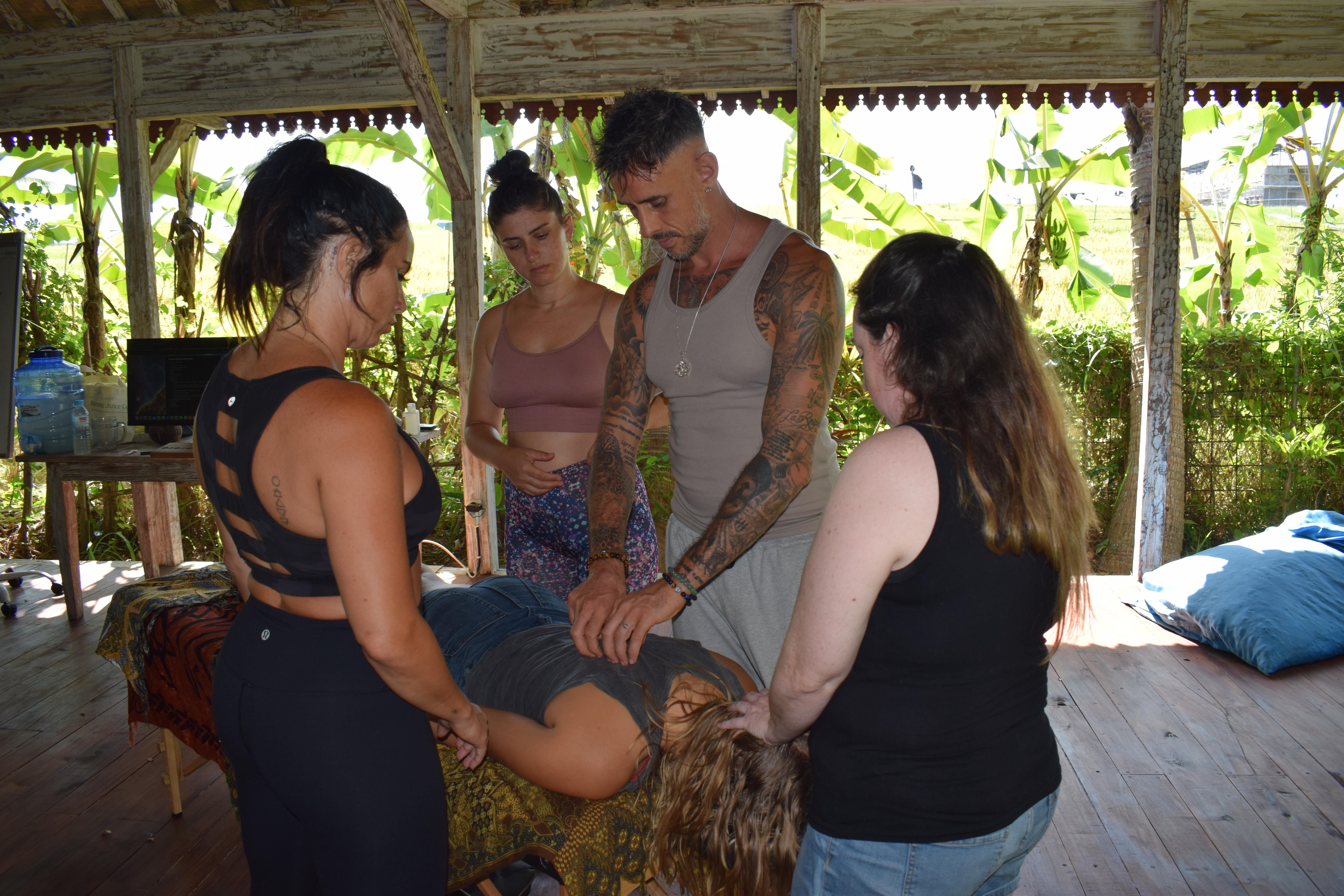
MASSAGE AND BODYWORK
Approach: Direct physical intervention to release stored trauma
Types: Deep tissue, myofascial release, craniosacral therapy, Rolfing
How it works: Accesses muscle memory and fascial restrictions
Best for: Physical trauma, chronic pain, body armor, touch trauma
Important: Must be trauma-informed and practiced by qualified therapists
INTEGRATING BODY-BASED HEALING
THE BOTH/AND APPROACH
You don't have to choose between talk therapy and body-based healing. The most effective approach often combines both:
Talk Therapy Provides:
Cognitive understanding and meaning-making
Relationship building and trust
Coping strategies and life skills
Integration of insights and patterns
Body-Based Healing Provides:
Nervous system regulation and safety
Access to implicit and somatic memories
Discharge of trapped survival energy
Restoration of natural resilience
THE IDEAL INTEGRATION SEQUENCE
Phase 1: Stabilization (Body-Based Focus)
Nervous system regulation
Safety and grounding practices
Basic somatic awareness
Stress management and self-care
Phase 2: Processing (Combined Approach)
Trauma processing through the body
Cognitive understanding and meaning-making
Emotional regulation and expression
Pattern recognition and insight
Phase 3: Integration (Both/And)
Life skills and relationship building
Meaning-making and post-traumatic growth
Ongoing nervous system maintenance
Continued personal development
DAILY BODY-BASED PRACTICES
Morning Nervous System Check-In:
Body scan for tension or activation
Gentle movement or stretching
Breathing exercises for regulation
Setting intention for nervous system care
Throughout the Day:
Micro-body awareness practices
Grounding techniques when triggered
Movement breaks and position changes
Breath awareness during stress
Evening Integration:
Review the day through body awareness
Release any held tension or stress
Gentle movement or yoga
Prepare nervous system for restorative sleep
WHAT TO EXPECT IN BODY-BASED HEALING
THE HEALING PROCESS
Early Sessions:
Learning safety and grounding techniques
Building body awareness and vocabulary
Establishing trust with practitioner
Beginning nervous system regulation
Middle Phase:
Accessing and processing stored trauma
Emotional release and expression
Movement and discharge practices
Integration of insights and awareness
Later Sessions:
Building resilience and capacity
Developing ongoing self-care practices
Integrating healing into daily life
Post-traumatic growth and empowerment
COMMON EXPERIENCES
Physical Sensations:
Tingling, warmth, or energy movement
Muscle twitching or spontaneous movement
Changes in breathing or heart rate
Feeling heavier or lighter than usual
Emotional Responses:
Sudden emotions without obvious triggers
Relief, sadness, anger, or joy arising
Feeling more emotionally available
Greater emotional regulation capacity
Mental/Cognitive Changes:
Clearer thinking and decision-making
Reduced anxiety and racing thoughts
Improved memory and concentration
Greater present-moment awareness
Relational Improvements:
Better boundaries and communication
Increased intimacy and connection
Reduced conflict and reactivity
Greater empathy and compassion
HEALING IS NOT LINEAR
Expect:
Good days and difficult days
Temporary increases in symptoms (normal part of healing)
Gradual improvements over time
Setbacks that are actually integration periods
Remember:
Your body's wisdom guides the process
Healing happens in layers, not all at once
Each person's timeline is unique
Trust the process even when it's difficult
OUR BE THE ONE PROGRAM INCLUDES EVERYTHING DETAILED IN THIS PROGRAM AND MORE...
Check out everything that is included here
PRACTICAL NEXT STEPS
IMMEDIATE ACTIONS
This Week:
Start body awareness practice - 5 minutes daily of noticing body sensations
Research practitioners in your area using the resources provided
Begin simple regulation - practice deep breathing when stressed
Read recommended books (see resource list below)
This Month:
Schedule consultations with potential practitioners
Start one body-based practice - yoga, breathwork, or movement
Track your nervous system - notice patterns of activation and calm
Build support system - connect with others on healing journey
BUILDING YOUR PRACTICE
Daily Practices:
Morning body check-in (5 minutes)
Midday movement break (2 minutes)
Evening nervous system care (10 minutes)
Bedtime body gratitude (2 minutes)
Weekly Practices:
Longer movement session (yoga, dance, etc.)
Nature connection time
Body-based healing appointment
Journal about body awareness insights
Monthly Practices:
Assess progress and adjust practices
Try new body-based healing modality
Connect with healing community
Celebrate body wisdom and growth
RED FLAGS: WHEN TO SEEK IMMEDIATE HELP
Stop and seek professional support if you experience:
Suicidal thoughts or self-harm impulses
Severe dissociation or feeling "unreal"
Flashbacks or intrusive memories
Panic attacks or severe anxiety
Substance abuse or addictive behaviors
Relationship violence or safety concerns
Crisis Resources:
National Suicide Prevention Lifeline: 988
Crisis Text Line: Text HOME to 741741
Emergency Services: 999 (UK) or 911 (US)
RESOURCES FOR CONTINUED LEARNING
ESSENTIAL READING
Books on Trauma and the Body:
"The Body Keeps the Score" by Bessel van der Kolk
"Waking the Tiger" by Peter Levine
"Trauma and Recovery" by Judith Herman
"In an Unspoken Voice" by Peter Levine
"Healing Trauma" by Peter Levine
Books on Nervous System Healing:
"Polyvagal Theory" by Stephen Porges
"The Polyvagal Theory in Therapy" by Deb Dana
"Anchored" by Deb Dana
"Accessing the Healing Power of the Vagus Nerve" by Stanley Rosenberg
Books on Somatic Approaches:
"Full Catastrophe Living" by Jon Kabat-Zinn
"Trauma-Sensitive Yoga" by David Emerson
"The Revolutionary Trauma Release Process" by David Berceli
ONLINE RESOURCES
Professional Organizations:
Somatic Experiencing International: traumahealing.org
EMDR International Association: emdria.org
International Somatic Movement Educators: ismeta.org
Trauma-Sensitive Yoga: traumasensitiveyoga.com
Educational Websites:
Trauma Research Foundation: traumaresearchfoundation.org
National Child Traumatic Stress Network: nctsn.org
Polyvagal Institute: polyvagalinstitute.org
DOCUMENTARIES AND VIDEOS
"Trauma: The Wisdom of the Body" (documentary)
"The Body Keeps the Score" (documentary based on the book)
TED Talks by Peter Levine, Bessel van der Kolk, and Stephen Porges
REMEMBER: YOUR BODY IS YOUR ALLY
Your body has been keeping you alive and carrying your story with incredible wisdom and resilience. It has never been your enemy - it has been your most faithful protector.
Body-based healing honors this wisdom by:
Listening to your body's messages
Working with your nervous system, not against it
Trusting your body's natural healing capacity
Integrating mind, body, and spirit in healing
The goal isn't to control your body, but to befriend it.
When you heal trauma through your body, you don't just recover from your past - you reclaim your birthright of aliveness, connection, and wholeness.
Your body has been waiting for you to come home to it. Today is the day you finally do.
READY TO GO DEEPER?
This guide gives you the foundation for understanding why body-based healing is essential, but true transformation requires guidance, support, and community.
If you're ready to heal trauma at its source:
✨ Join BE THE ONE for comprehensive body-based trauma healing
✨ Book a discovery call to explore working together
✨ Follow @markreidhealing for daily body-based healing wisdom
Your body holds the key to your freedom. It's time to unlock it.
Created with love by Mark Reid Healing For more resources: www.trystedsoul.com


